“Borders and Walls: What Separates and Divides Us.”
Upon first reading this topic I thought about two main tracks of thought: Physical and Psychological borders. It is important to note that they are both different but also both can feed into each other in a way. Physical borders are ones we can see and touch and interact with, whereas psychological borders are those we develop in our minds that divide us from others. Both can be beneficial, and both can be dangerous.
Physical Borders
Some borders between countries are physical, with the most notable example in America being Donald Trump’s “Build a Wall” ideology. It is important to note that not all borders between countries are physical, as in Europe it is possible to simply walk between two  countries without much of an issue. Borders between countries can be anything from mountains and rivers to an invisible line you may never know you crossed. One of my favorite areas in DisneyWorld is on the ‘Jungle Cruise’ in Animal Kingdom where they take visitors through different parts of ‘Africa’ and sometimes the only way you can tell is through the landscaping changes (pictured.)
Fences between homes can be a smaller border between you and your neighbors. Most people don’t like the idea of their neighbors being able to stroll around their backyard freely, and of course people want to keep pets contained, so fences are important to the structure of a neighborhood.
Walls between rooms can add an element of privacy to a family. People probably wouldn’t like the idea of a lack of walls in their bathroom so the whole world can see them doing their business. Additionally, I can’t help but think of a teenage boy in his bedroom looking at unsavory things on his laptop with the privacy of being in his room to protect him. He likely wouldn’t look at these sites if he were in the middle of his dining room with mom and dad nearby!
The veil in the ancient church is a historical example of what divided people long ago. There were two main rooms in the temple: The Holy Place and the Holy of Holies. 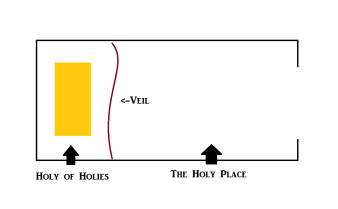 Between the two there was a veil that the people could not pass so they could not talk to God directly. When Jesus died on the cross the veil tore down the middle, allowing people the freedom to go from room to room and speak to God as they please. I think it is important to note that walls and barriers have been around for thousands of years, with some dividers having major consequences as this one did.
Psychological Borders
It is obvious to talk about how different demographics divide us. Things like sexuality, race, gender, age, and religion can all cause us to separate from other people and see them as ‘other’ than us, which can be very dangerous if taken to an extreme. In America, it is popular for political parties to divide us from other people with many people identifying as Republican or Democrat and seeing the other party as their enemy, especially around voting time.
One of my favorite movies is the musical The Greatest Showman. While working on this project, I took some time to listen to the soundtrack of the movie and was amazed to hear how many times the term ‘wall’ or ‘border’ was mentioned. This is not hard to believe, as the movie is about those that are pushed away from society and treated as ‘freaks’ until they can show the world who they truly are outside of their appearance.
Unfortunately, I think a lot of our psychological borders between us and others come from a heart of anger and hatred. For some this might be racism or sexism, for others, this might be strict religious or political beliefs. In The Greatest Showman, the hatred 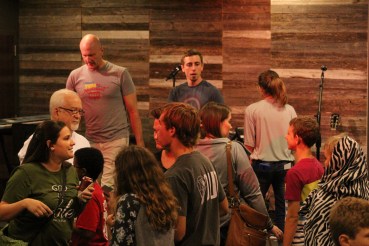 between the ‘normal’ people and the ‘freaks’ escalated at the climax of the movie, causing a huge fight resulting in a large fire. I think this is a good example of what having this heart of anger can do to your mind; if you allow it to fester and grow, it may one day explode into an uncontrollable fire and people can get hurt. (Pictured is a group of people at a religious function. Religion can add a sense of community and belongingness to individuals of varied backgrounds. It can also be a barrier between people of different religions.)
How can we be united when there are so many walls?
While I was working on this project, I wanted to be sure to talk about how these walls do not have to define us. While many of them are necessary for our world to work properly, they can also cause strife between people groups. Is it possible to find a middle ground that many can agree upon? I think the answer is ‘yes.’
Even with borders between rooms, homes, and countries, it is important to remember that people that are separated from you are still people and should be treated as such. 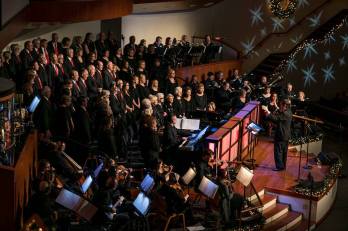 Dehumanizing those that are different than you can become very dangerous very quickly, so this must be avoided. Instead, focus on what makes each person similar to you. Does the Indian girl in class like the same kind of music as you? Does the transgender boy have the same career aspirations? Is the old man a Star Wars fan like you? While these things may not be readily apparent just by looking at someone, they are things that can unite you with someone physically very different from yourself. (Pictured is an illustration of how music can bring together people of different genders, ages, and ethnicities to make something beautiful.)
Through this, it is important to take the time to talk to others, especially those that you think may not be similar to you. Again, the similarities I mentioned above are not  visible, but they still exist and can help a relationship and connection form once a conversation is started. It may be hard to take the plunge of walking up to someone that may seem very different than you, but through that, you can find a real friend in someone that you may never have otherwise spoken to. (Pictured is a photo I took at a concert. People from all walks of life can come together and enjoy the same type of music without any barriers between them, which is incredible. It again illustrates the power of the arts to bring people together through common interests.)
Before starting college, I was not heavily exposed to those that were drastically different than I was. I grew up homeschooled in a Baptist church, so many people around me had similar education levels, looks, and beliefs. Starting college turned this on its head, however, and now many of my friends in class come from different background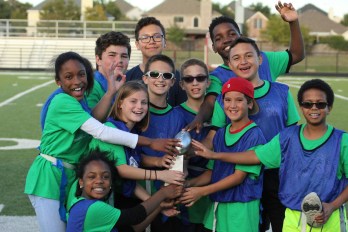 s than my own. I have made friends that come from all over the world with different religious beliefs and identities than I would have likely encountered otherwise. I am thankful for the friends I have made through college and the stories I have heard through them. I think I have become a better person due to letting these walls between us fall and learning from others. (Pictured is an illustration of how sports can bring together people of many different backgrounds to work together as a team toward a common goal.)
 Amanda Roach